
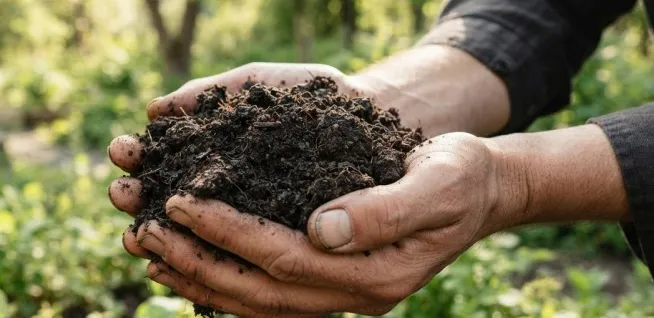
Controlled Bio-composting —everything organic under your feetturned into profit
We recycle any organic waste (manure, poultry litter, straw, plant tops, food scraps, processing waste) into high-quality bio-fertilizers, fully destroying pathogens and weed seeds. We cut the cost of purchased fertilizers and open up a new source of income.
What is industrial bio-composting?
Industrial bio-composting is a comprehensive biotechnological service for the accelerated recycling, deodorization and conversion of any organic waste from agricultural and industrial production (cattle manure, pig manure, poultry litter, defecation lime, straw, husks, distillery stillage) into a sterile, high-quality organic substrate.
The service includes a microbiological audit of the waste, design of process windrows (windrow layout maps), and the integration of specialized enzyme decomposers and native thermophilic bacterial complexes.
Unlike conventional composting, we use industrial methods and bioactive components that guarantee:
— Complete destruction of pathogenic microflora and weed seeds at every stage
— Minimal processing time (21–28 days), ensuring full environmental safety and eliminating fines from environmental authorities.
— Consistent quality of the finished product, confirmed by laboratory tests
We use three key methods:
-
Thermophilic composting
an active aerobic process at high temperatures (up to 65–70°C) that reliably destroys pathogens and weed seeds. Suitable for large volumes of manure and poultry litter.
-
Anaerobic composting
an oxygen-free process for long-term storage and maturation of organic matter. Ideal for stabilizing composition and producing high-humus products.
-
Vermicomposting
processing organic matter with California red worms. Produces the highest-quality vermicompost — a premium product for organic farming and gardening.
Result
The result: any organic waste on your farm becomes a valuable asset — fertilizer for your own fields or a marketable product for sale.
Who it's for
Who benefits most from this solution
- Livestock complexes and farms → large volumes of manure and poultry litter (cattle, pigs, poultry) — instead of paying for disposal, you get valuable fertilizer.
- Crop farms → heavy dependence on purchased fertilizers — we replace them with your own high-quality compost (30–50% savings).
- Processing plants → waste from food production, grain processing and oil extraction — we turn it into a product, not a problem.
- Farms seeking a closed loop and organic certification → full recycling of organic matter is a prerequisite for organic production.
- Farmers who want to earn from selling bio-fertilizers → compost, vermicompost and biohumus are in demand on the organic fertilizer market.
Benefits
Why it pays off for your farm
-
01
No more environmental fines
- · Lower waste hazard class and complete elimination of ammonia and hydrogen sulfide odors at storage sites.
-
02
Up to 50% savings on NPK purchases
- · Your own waste returns to the fields as an organic fertilizer that plants can easily absorb.
-
03
Fields free of weeds and diseases
- · Total destruction of helminth eggs, pathogens (salmonella, E. coli) and weed seeds when heated to +65 °C.
-
04
6–8 times faster site turnover
- · The conventional manure/litter maturation cycle is cut to 21–28 days without expanding storage areas.
-
05
Restoring soil fertility
- · Higher humus levels, greater soil water-holding capacity and prevention of water and wind erosion of arable land.
How we work
-
1
C:N balance calculation
Laboratory analysis of the waste and mixing of nitrogen fractions with carbon-rich materials to create an optimal substrate structure.
-
2 3–5 days
Microbiological start
Application of enzyme decomposers to bind ammonia instantly and completely eliminate unpleasant odors by day 3–5.
-
3 10 days
Thermophilic pasteurization
Keeping the temperature inside the windrow at +60–65 °C for 10 days to totally destroy pathogens and weed seeds.
-
4
Process turning
Regular mechanical aeration of the mass to maintain strictly aerobic fermentation without putrefaction.
-
5 21–28 days (full cycle)
Final humification
Colonizing the maturing substrate with beneficial soil microflora and fungi to synthesize humic acids within the 21–28 day overall cycle.
Results
Results we can confirm
- Thermophilic fermentation time
- 21–28 days (the conventional recycling cycle cut 6–8 times)
- Vermicomposting time
- 2–4 months (to produce structured premium biohumus)
- Pathogen disinfection
- 100% (destruction (salmonella, E. coli, helminth eggs at +60–65 °C))
- Weed seed destruction
- 100% (loss of germination (complete thermal denaturation above +55 °C))
- Lower mineral nutrition costs
- 30–50% (through full replacement of nitrogen-phosphorus mineral fertilizers)
- Economic benefit from recycling
- 100% (elimination of environmental fines and a lower hazard class for production waste)
- Return on investment in the technology
- 1–2 seasons
Depending on waste volumes, the composition of the organic matter and your objectives, we achieve the following figures.
Our offerings
Comprehensive solutions with proven effectiveness
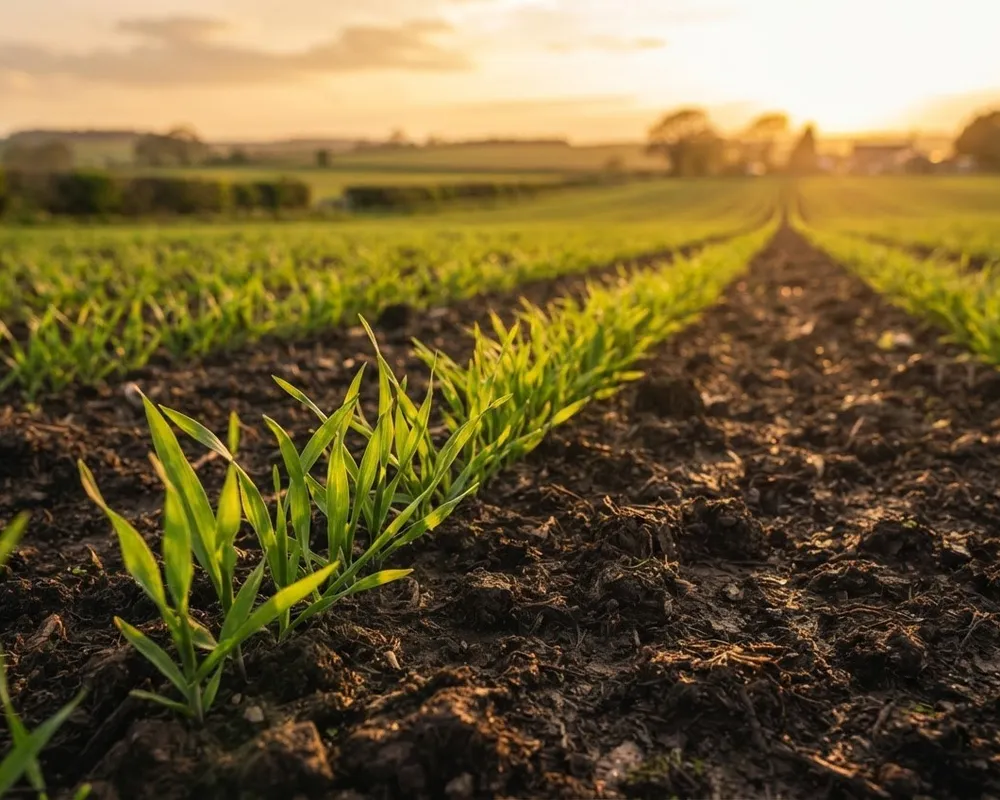
Bio-design and Soil Revival
Restoring fertility of degraded and depleted land with a guaranteed increase in crop survival rate of up to 100%
Systemic Sanitation and Immunization of Plantings
Biological control of plant health, cutting chemical protection costs by up to 100%
Controlled Bio-composting and Organic Waste Recycling
High-tech recycling of any organic waste into premium bio-fertilizers with complete destruction of pathogens and weed seeds.
Ecosystem approach
Industrial bio-composting — the foundation of the closed loop of Bhumi efficient farming
Industrial bio-composting is the heart of the efficient farming ecosystem. It closes the farm’s energy loop:
- Waste stops being a problem and becomes an asset
- Your own compost is the basis of healthy soil and stable harvests
- Selling surplus is a new source of profit
- Full recycling of organic matter is a prerequisite for organic certification
We create a system in which you have no waste — only resources working for you.
Are manure or poultry litter piling up at your operation?
We will run a microbiological audit of the organic feedstock and design a solution tailored to your farm’s parameters. Eliminate environmental risks and close your organic matter deficit.


 More than 2,000 farmers already grow with Bhumi